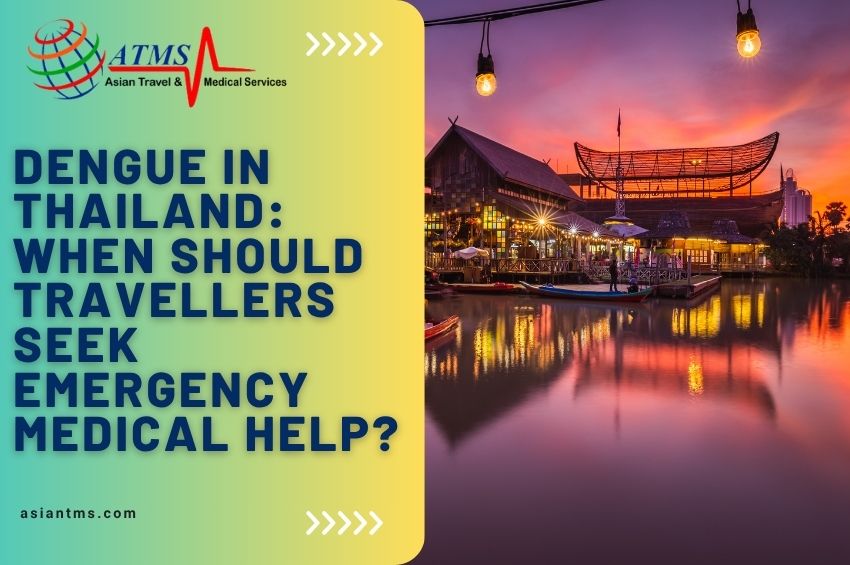
Thailand is a favourite destination for travellers looking for beautiful beaches, rich cities, cultural adventures and noteworthy trips. However, travelling in an overgrown country also means the addition of certain health risks. One of these is dengue fever, a mosquito-borne serious infection that can frequently lead to a severe medical crisis.
It is prevalent in tropical and subtropical regions, including Southeast Asia. Aedes mosquitoes may be active even during the day, so travellers should not assume that preventing mosquitoes eliminates the risk. Many people recover from dengue within one to two weeks. But sometimes it becomes worse and life-threatening.
For general travellers, recognising dengue symptoms early is important. More importantly, seeking medical attention when symptoms demand it can help prevent complications. At Asian Travel and Medical Services (ATMS), we know what worries can make you feel devastated while going overseas. We provide emergency medical help in Thailand to help travellers and their families navigate health crises in Thailand and provide appropriate help when required.
Dengue Symptoms to Consider
This may be troublesome for a traveller to decide whether they need medical attention. Common manifestations can include:
- High fever
- Severe migraine
- Pain behind analysis
- Muscle, bone or joint pain
- Nausea or vomiting
- Skin rash
- Fatigue
- Swollen glands
Symptoms can vary between people. If you evolve a extreme fever or any of these symptoms while visiting Thailand, we recommend seeking medical recommendation alternatively, utterly provided that you have a common viral infection. It is likewise important to inform the healthcare professional that you have recently travelled to Thailand.
When Tourists Need Emergency Medical Help?
The main thing travellers need to appreciate is that dengue can become more serious around the time the fever starts to decrease. A sagging temperature does not inevitably mean that you are recovering. Seek urgent medical management if you experience warning signs like:
- Severe intestinal pain
Intense or persistent abdominal pain may be a warning sign of severe dengue. It should not be dismissed as ordinary stomach discomfort, particularly when accompanied by fever or vomiting.
2. Persistent vomiting
Repeated vomiting can influence drying up and can be associated with severe dengue. If you cannot keep fluids down, restorative assessment becomes very important.
3. Bleeding
Bleeding from the nose or gums, blood in vomit or stool, or other bleeding demands immediate medical attention. Severe dengue can include significant bleeding.
4. Rapid breathing or breathing troubles
Rapid breathing can signify that the sickness is more serious. This is a situation where travellers should seek crucial health care rather than waiting for symptoms to improve.
5. Extreme weakness
Significant fatigue can be a warning sign. You can also hire our medical repatriation services provider in Thailand if required.
6. Pale Skin
Changes like pale or cold skin may indicate serious problems and demand urgent medical attention.
7. Reduced urination or excessive thirst
Difficulty maintaining hydration can be dangerous during a serious illness.
Why You Should Not Wait for the Fever to Return
One of the most important dengue facts for travellers is that feeling better when the fever drops does not necessarily mean the dangerous period has passed. In severe dengue, warning signs can act out the fever falls. This critical period can occur approximately three to seven days later syndromes begin.
How We Can Help During a Medical Emergency in Thailand
Being ill in your home country can be stressful. You may not have visited local nursing homes, or have doubts about where to seek medical treatment, or be worried about communicating your medical needs. At ATMS, our medical Assistance provider Thailand provides comprehensive medical help to support travellers when urgent medical situations arise.
We can assist with the following medical arrangements and help connect travellers with appropriate healthcare services. Our focus is on making the process smooth to navigate, specifically when you are handling a serious illness in a different atmosphere.
Depending on the circumstances, medical help may include matching with healthcare providers, providing appropriate information, and advocating for the wider healing process.
How Tourists Can Avoid Dengue
Prevention is always important. Travellers can stay protected by following the preventive measures below, such as:
- Using an appropriate mosquito repellent
- Wearing clothing that covers the arms and legs where appropriate
- Staying in accommodation with screens or air conditioning
- Using mosquito nets where appropriate
- Avoiding areas following high mosquito activity when possible
- Taking additional precautions all along the sunshine, when Aedes mosquitoes may be active
WHO recommends travellers take measures to prevent mosquito bites when visiting remote place dengue transmission occurs.
Travelling in Thailand? Contact Us
Our emergency medical help in Thailand is designed to supply useful support and healing plans when you need it. A festival may not always go according to plan. If sickness or harm occurs, you should not have to navigate the situation alone. If you or a beloved person experiences a healing crisis while travelling in Thailand, contact our medical Services provider in Thailand for help and medical arrangements.